By Lindsey R. Peterson, Ph.D.
This fall, five college students from the University of South Dakota, South Dakota State University, and Augustana University completed an intensive, hands-on institute — From Archive to Exhibit: Project-Based History Education Institute — hosted by the Civil War & Reconstruction Governors of Mississippi (CWRGM) and funded in partnership with the Library of Congress: Teaching with Primary Sources Consortium.
Led by historian Lindsey R. Peterson and educator Stephanie Puhrmann, the institute brought together emerging historians and future educators to explore how primary sources can anchor rigorous, complex, and engaging history education. Over the course of the institute, participants analyzed digitized documents, experimented with innovative teaching strategies, and ultimately created original digital museum exhibits using nineteenth-century sources.
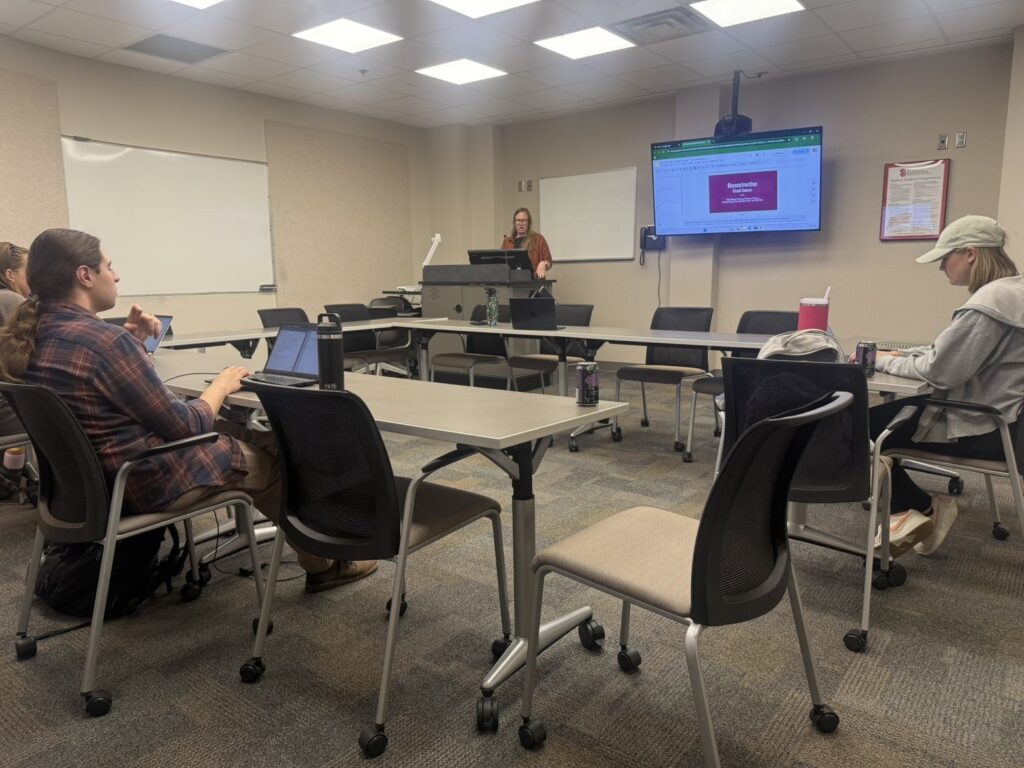
Participants worked extensively with CWRGM’s six-week open access curriculum on the historical research process and the CWRGM digital archive, which contains thousands of letters written to Mississippi’s governors during the Civil War and Reconstruction, as well as complementary materials from the Library of Congress. Participants stepped directly into the role of students, completing the same kinds of tasks they might later assign from the CWRGM curriculum in their classrooms.
Participants practiced strategies for teaching emancipation as a process, not a single moment. Letters from formerly enslaved people, Union soldiers, widows, immigrants, and students revealed how freedom was negotiated differently across time, geography, and social position. These sources became the foundation for lessons on historical context, close reading, and argumentation.
The capstone of the institute asked participants to synthesize their learning by creating online digital museum exhibits using primary sources from CWRGM and the Library of Congress. Each project required students to develop a research question, select and interpret evidence, and present their findings in an accessible, visually engaging digital format intended for a public audience.
Isabella Purzol, a senior History major with an Education minor at the University of South Dakota, created “The Civil War’s Impact on Irish Immigrant Life,” which traced how Irish immigrants in Mississippi and beyond navigated loyalty, labor, and identity during the war.
Sophomore History major with a teaching specialization at South Dakota State University, Kiya Williamson, created “Southern Widows & the Civil War.” Her exhibit centered women’s voices to explore loss, resilience, and survival in the context of war and Confederate nationalism, highlighting how widowhood reshaped family structures and economic realities.
Patrick Wadley, a University of South Dakota student majoring in History and International Studies with a minor in Russian Studies, developed “University of Mississippi’s ‘University Greys’: The Student Experience in War—A Story Told in Letters.” His project examined students’ motivations for enlisting and how they experienced the war intellectually and emotionally, revealing the costs of conflict on young men and educational institutions.
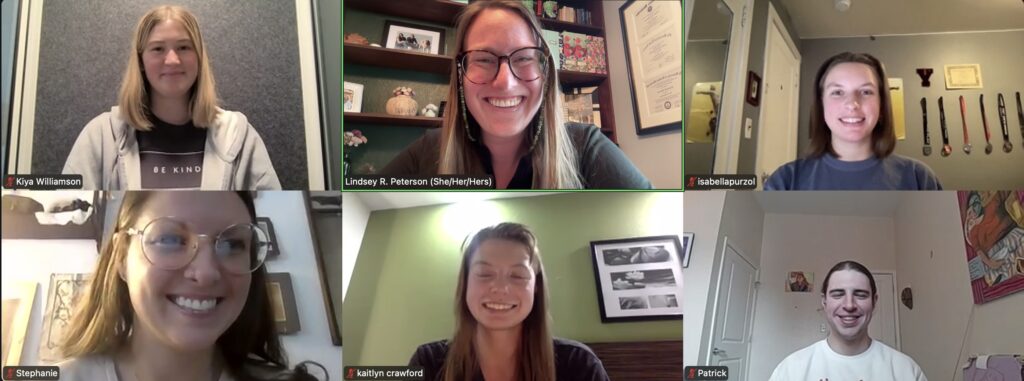
Another highlight was playing Brine & Blood, an educational role-playing game that uses primary sources to immerse players in the moral, political, and personal stakes of emancipation in Civil War Mississippi. Through gameplay, institute attendees grappled with many of the key realities of historical decision-making: constrained choices, incomplete information, and competing perspectives.
For many participants, the institute served as a bridge between academic history and public-facing education. As one participant reflected, “I found the task-based learning—by doing what our students would do—to be extremely valuable. Also the experienced viewpoints on making things accessible will be incredibly valuable and helpful for myself going forward with any digital or educational project.”
Several noted that the experience expanded their sense of who history education is for and where it can happen. Peterson, Puhrmann, and the institute, according to one participant, “were extremely useful.” They continued, “I now have an entire class structure and documentation to use and/or build from as opposed to starting from scratch. They also give me tips and guidance on more informal educational opportunities and approaches.” The institute’s emphasis on digital exhibits, informal learning environments, and collaboration with cultural institutions underscored that history education extends well beyond the traditional classroom.
By engaging directly with backward-designed curriculum, accessibility considerations, and authentic assessment, students left with tools they can immediately adapt for student teaching, museum work, or community-based projects. As the five participants move forward in their academic and professional careers, the institute’s impact will extend into classrooms, museums, and community spaces across the region. Whether guiding high school students through a National History Day project, designing interactive lessons on emancipation, or developing public history exhibits, they carry with them a model for teaching history that is evidence-based, inclusive, and deeply engaging.
The From Archive to Exhibit institute demonstrates what is possible when historians, educators, and students collaborate across institutions to rethink how history is taught—and who gets to tell its stories.
