A Blog Exploring the Backstories of the Civil War & Reconstruction Governors of Mississippi Project

Tag: Reconstruction

African American Families’ Fight Against Apprenticeship Laws in Reconstruction Mississippi

By Alessandra Diaz

Alessandra Diaz began working with the Civil War & Reconstruction Governors of Mississippi transcription and tagging team as a high school student from Queens, New York in 2023, and has continued through completing her first year of studies at Columbia University. She authored the following blog post exploring Black parents’ efforts to reconstitute their families and demand due process when faced with the unlawful apprenticing of their children.

In December 1876, a formerly enslaved African American man named Jacob Hodges wrote to Mississippi Governor John M. Stone regarding an ongoing investigation into the kidnappings of two African American children.[1] One of these children was his twelve-year-old son, Thomas Hodges. The other, nine-year-old Alexander Ward, was the son of a formerly enslaved woman, Harriet Ward. Hodges and Ward went to insurmountable lengths to spur Mississippi and Tennessee state authorities into returning their children after they had been kidnapped and forced into unlawful apprenticeships. A series of letters from December 1876 to June 1877 between Hodges, Ward, their lawyers, and the Mississippi government showcase the harrowing yet resilient battle many African Americans fought against discriminatory laws that were meant to keep them in a cyclical state of enslavement. To have a family outside of racialized state control—after enslavers tore apart enslaved families for centuries—was a right African Americans sought relentlessly during enslavement and after national emancipation.

Hodges and Ward’s legal battles came in the wake of the Mississippi Black Codes, signed and passed in the state legislative sessions of November and December of 1865. These laws, which ranged from criminalizing the unemployment of formerly enslaved men to banning all freed people from carrying firearms, explicitly aimed to limit their civil and economic rights and control their livelihoods. One of these laws targeting the labor of formerly enslaved people was entitled “An Act to regulate the relation of master and apprentice, as relates to freedmen, free negroes, and mulattoes.” This allowed law enforcement to assign those African American children whom they deemed to be abandoned to a “master or mistress” (court’s legal term) to preside over them, which in turn exerted oppressive control over African American families and their subsequent fracturing.[2]

Former enslavers exploited this law further, creating illegal apprenticeships through kidnappings, coercion, or against the will of the children’s families. If the Hodges and Ward children had been abandoned or if their parents had consented, the apprenticeship would have been lawful. However, because the parents did not consent, and made it clear that they did not, it was an illegal kidnapping. While this law outlined the rights of parents to recover their children if they were illegally apprenticed, former enslavers continued to subvert this law, as exhibited by the Hodges and War case. These loopholes diluted emancipation’s promise by creating legal opportunities for the effective re-enslavement of African American children.

Apprenticeship was the “abusive indenture of children that came in the immediate aftermath of emancipation.”[3] Specific language in the Hodges and Ward letters indicates an apprenticeship case as opposed to a regular kidnapping. Hodges explicitly used the word “bondage” about the children’s kidnapping in a January 10, 1877, letter to the governor’s secretary.[4] The terminology used to describe enslavement indicates the true aim of these apprenticeship laws: effectively re-enslaving African American children against the will of their parents by forcing them to do unpaid labor. Mississippi Judge B. C. Sims, who presided over the case and issued the warrants for the arrest of the kidnappers, wrote to the same governor’s secretary on December 29, 1876, that the two children had been taken by the two white men to “be held in service by them” against the “dignity and peace of the State of Mississippi.”[5] One witness had also described the children, in a letter written on January 28, 1877, as having been “driving a gin,” or cleaning and separating cotton before traveling eight miles to Celina, Tennessee.[6] To the parents, this is an illegal kidnapping and forced bondage. Under the apprenticeship law, however, this could have been perfectly legal.

Legal Document from Jacob Hodges; January 28, 1877. Courtesy of the Civil War and Reconstruction Governors of Mississippi Project. 

Furthermore, while it is not explicitly stated that the men who kidnapped the children, William Williams and Stokes Wilhite, had previously been the enslavers of the two parents, Hodges and Ward themselves had previously been enslaved. Former enslavers commonly sought to immediately apprentice the children of families they had previously enslaved.[7] There is also evidence in census records that Williams enslaved people while a farmer in the 1860s in Franklin, Tennessee. He had enslaved, among others, one male, aged 24 years old, and one woman, aged 18 years old.[8] Hodges and Ward were, at the time of the kidnapping, farm laborers under the employment of a man named George C. Coleman. Coleman owned the farm where the two parents worked in 1876.[9] There is no evidence of George C. Coleman in the 1860 slave schedules that indicates he knew or enslaved Hodges or Ward.

Historian Mary Niall Mitchell asserts that former enslavers commonly used apprenticeship as a justification for kidnappings. She states that planters or sharecroppers exploited “the dependency of children…and tried to create for themselves a pool of unfree labor.”[10] Williams and Wilhite’s actions and the parents’ reactions were similar to cases wherein African American parents, especially mothers, would try the case in court. Mothers like Harriet Ward would be denied the rights to their children because they were seen as unfit, usually due to poverty and unemployment. Mitchell cites an example of a New Orleans judge, who said, in an 1864 case, that “we think it very probable our course has been misrepresented by some mothers, who think they can support themselves & family.”[11]

The American legal system seldom sided with women and families who attempted to regain guardianship over their children and were seen as being unfit or unreliable. However, as Harriet Ward did, these mothers did not submit their children to these laws. Mitchell explains how family members “all appealed to the Freedmen’s Bureau for assistance in obtaining custody of children.”[12] The Freedmen’s Bureau was an especially common resource that many families sought for legal representation when appealing to the courts. Although sometimes the Bureau would side with the former enslaver and allowed them to keep the children who had been kidnapped, they also sent letters and petitions on behalf of families to authorities. Regardless, African American families sought legal representation and fought incessantly for their right to their children throughout the presence of apprenticeship laws.

The kidnappings of Alexander and Thomas were thus contextualized by a pattern of African American families pushing against apprenticeship laws that allowed for the legal separation of them from their children. Even after the kidnappers, Williams and Wilhite, were correctly identified, authorities took a negligent approach towards the case. Initially, a chancellor named L. Haughton issued a writ of Habeas Corpus for the children in early January 1877 and hired officers to deliver the writ to the kidnappers, which would hopefully lead to an arrest.[13] A writ of Habeas Corpus meant that whoever was being detained must appear in front of a court to determine the legitimacy of their detention (this writ was issued for the children, not the kidnappers).

For an unknown reason, Ward and Hodges were required to pay the officer an extra ten dollars on top of his daily salary to go to Tennessee and rescue their children. Following their payment to the officer, the parents felt “assured that [their] children would be returned to [them].”[14] However, as Hodges explained in the January 10th letter, after three days, the officer had not succeeded. The officer had remained in Aberdeen and did not attempt to uphold the agreement. Unfortunately for Ward and Hodges, “it was entirely too late to put the papers into the hands of another officer,” and they were not reimbursed or given another opportunity to request this kind of investigation again. Hodges “complained” (as described in the cover of his letter) to Mississippi Governor John M. Stone that the officer’s negligence was a violation of their civil rights. He claimed that had the kidnapped children been white, “the action of the officer would have been different; this is in direct violation of the pledges made on the stump by all democratic speakers before the two Elections prior.”[15] Hodges was livid at the law enforcement that had failed their families. He was adamant that the law had been violated, and he deserved due process.

The parents also had a white attorney, M. M. Cummings, and the aforementioned Judge B. C. Sims, a white justice of the peace, who acted as intermediaries between the parents and the state. Cummings had encouraged Hodges to file a request for the writ of Habeas Corpus. This places the kidnapping in the category of detention and forced servitude, as once again, the writ was issued for the children. The point of the writ would be that law enforcement could legally obtain the children and bring them before the court. Cummings also requested on January 19, 1877, that Justice Sims and Chancellor L. Haughton place a warrant out for the arrest of the alleged kidnappers.[16] The warrant was issued after the aforementioned failed attempts to arrest the kidnappers. Cummings also delayed in his request that the Governor of Tennessee be involved in the case, while also denying the Judges’ culpability in the late issuing of the warrants. Two other authority figures, Aberdeen Mayor Thomas S. Sykes and state senator R. O Reynolds, were also sent letters enclosing the documents of the case for them to review. Sykes would later petition Secretary Kinloch Falconer and Governor Stone on behalf of the parents.[17]

 On June 11, 1877, Mayor Sykes wrote a brief letter to Governor Stone, saying that “Thomas & Alexander have been gone ‘till yesterday when they were returned by F. E. Stout into their custody, and that they now have the said Thomas and Alexander in their parental care.”[18] Stout was another police officer hired to deliver the writ and the warrant of arrest. After nearly six months of working with authorities and wrestling with indifferent law enforcement, while also fighting against centuries of law and psychological backing for the forced servitude of African American children, Hodges and Ward had reunited their families. At every opportunity for their intervention, the two parents made their voices heard, seeking their legal representation with their own money. They also exhibited no hesitancy in taking their case to the highest authority in the state. While the ultimate fate of their family is not documented, Hodges and Ward had nonetheless succeeded in keeping their family units whole. Their case joins the powerful historical tradition of African American families advocating for themselves and their families despite injustice.

Alessandra Diaz is a rising sophomore at Columbia University in the City of New York, studying History with a specialization in urban history of the Americas. She worked on the Civil War on Reconstruction Governors of Mississippi Project as a Transcription and Tagging research assistant from September 2023–June 2025. You can read her other CWRGM-related blogpost, “Mississippi Governor James L. Alcorn’s Impact on Education During Reconstruction,” here.


[1] Jacob Hodges, “Letter from Jacob Hodges to Mississippi Governor John M. Stone; December 29, 1876,” Mississippi Department of Archives and History, Stone Series 807: Box 1008, Folder 03 in Civil War & Reconstruction Governors of Mississippi, accessed August 1, 2025, https://cwrgm.org/item/mdah_807-1008-03-19.

[2] Laws of the State of Mississippi, (J.J. Shannon & Sons, 1866), 4-6, https://transcription.si.edu/project/42074.

[3] Herbert G. Gutman, The Black Family in Slavery and Freedom 1750-1925 (New York: Pantheon Books, 1976), 403.

[4]  Jacob Hodges,”Letter from Jacob Hodges to Mississippi Governor John M. Stone; January 10, 1877,” Mississippi Department of Archives and History, Stone Series 807: Box 1008, Folder 05 in Civil War & Reconstruction Governors of Mississippi, accessed August 1, 2025, https://cwrgm.org/item/mdah_807-1008-05-15.

[5] Hodges to Stone, December 29, 1876.

[6] Jacob Hodges, “Legal Document from Jacob Hodges; January 28, 1877,” Mississippi Department of Archives and History, Stone Series 807: Box 1008, Folder 06 in Civil War & Reconstruction Governors of Mississippi, accessed August 1, 2025, https://cwrgm.org/item/mdah_807-1008-06-16.

[7] “Mississippi Authorizes “Sale” of Black Orphans to White “Masters or Mistresses,”” A History of Racial Justice, Equal Justice Initiative. https://calendar.eji.org/racial-injustice/nov/22

[8] “1860 U.S. Federal Census, Slave Schedules, Schedule 2, page 41,” U.S. Census Bureau, Ancestry, accessed August 1, 2025, https://www.ancestry.com/sharing/25450302?mark=7b22746f6b656e223a227373306273722b446e586545515547366741475368524b4f5039627153534774374957424f326c2f3643553d222c22746f6b656e5f76657273696f6e223a225632227d

[9] Thomas B. Sykes, “Legal Document from Thomas B. Sykes; January 20, 1877,” Mississippi Department of Archives and History, Stone Series 807: Box 1008, Folder 06 in Civil War & Reconstruction Governors of Mississippi, accessed August 1, 2025, https://cwrgm.org/item/mdah_807-1008-06-13.

[10] Mary Niall Mitchell, “Labor: Tillie Bell’s Song” in Raising Freedom’s Child: Black Children and Visions of the Future after Slavery (New York: NYU Press, 2008): 143–87.  http://www.jstor.org/stable/jj.13944196.8, 168.

[11] Mitchell, Raising Freedom’s Child, 169.

[12] Mitchell, Raising Freedom’s Child, 159.

[13] L. Haughton, “Letter from L. Haughton to Mississippi Governor John M. Stone; January 15, 1877,” Mississippi Department of Archives and History, Stone Series 807: Box 1008, Folder 06 in Civil War & Reconstruction Governors of Mississippi, accessed August 1, 2025, https://cwrgm.org/item/mdah_807-1008-06-01.

[14] Jacob Hodges, “Letter from Jacob Hodges to Mississippi Governor John M. Stone; January 10, 1877,” Mississippi Department of Archives and History, Stone Series 807: Box 1008, Folder 05 in Civil War & Reconstruction Governors of Mississippi, accessed August 1, 2025, https://cwrgm.org/item/mdah_807-1008-05-15.

[15] Hodges to Stone, January 10, 1877.

[16] Jacob Hodges, “Letter from Jacob Hodges to Kinloch Falconer; January 19, 1877,” Mississippi Department of Archives and History, Stone Series 807: Box 1008, Folder 06 in Civil War & Reconstruction Governors of Mississippi, accessed August 1, 2025, https://cwrgm.org/item/mdah_807-1008-06-09.

[17] Sykes, January 20, 1877.

[18] Thomas B. Sykes, “Letter from Thomas B. Sykes to Mississippi Governor John M. Stone; June 11, 1877,” Mississippi Department of Archives and History, Stone Series 807: Box 1010, Folder 101 in Civil War & Reconstruction Governors of Mississippi, accessed August 1, 2025, https://cwrgm.org/item/mdah_807-1010-11-23.

“Skilets are rusting for the wont of some Thing to put in them”: African American Citizens Writing to the Governor

By DeeDee Baldwin

In the early months of 1871, Mississippi Governor James Lusk Alcorn received letters from three young Black men: George Fulcher of Eggs Point, Albert Snowden of Lauderdale County, and G. A. Watkins of West Point. All three letters are poignant examples of African Americans embracing both their new citizenship—including the right to address the governor directly—and their new access to education and literacy. The letters are difficult to read due to the irregular handwriting and spelling that would be expected of men who had only recently been able to enjoy the right to education, but that only adds to their power.

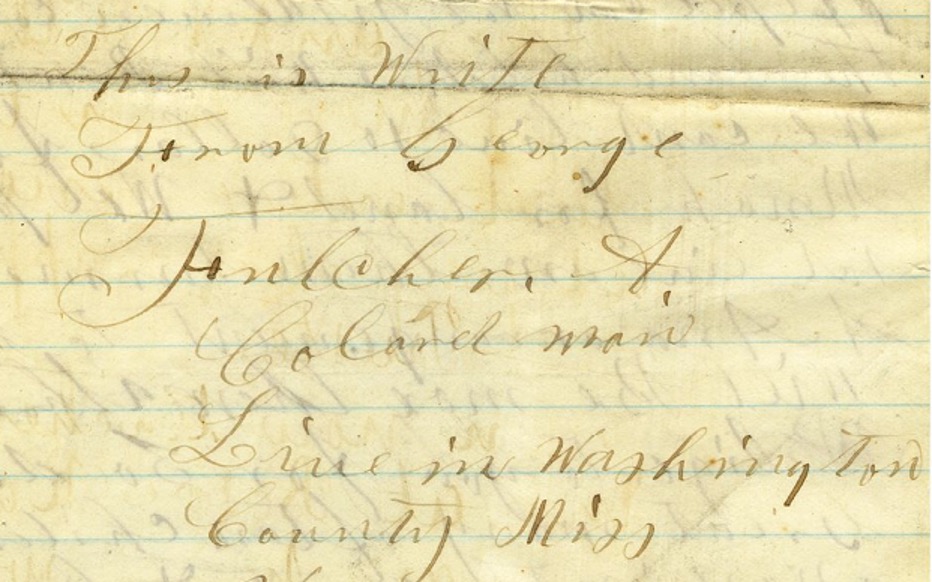
On January 19, George Fulcher of Washington County took his “Pen in hand To drop [Governor Alcorn] a few lines” about the difficulties faced by the people in his community. According to the 1870 census, Fulcher was a farm hand who was born in Mississippi around 1840 and lived near Eggs Point with his wife, Polly, and two young children. Fulcher hoped that Alcorn “will Not Be orfended at my Bold undertakeen for the laws Are made By you in this State & we poor colord peepel can Not git a liven.” The landholders are charging too much for rent, he writes, stating in language that is both colloquial and evocative, “the Skilets are rusting for the wont of some Thing to put in them.” He suggests that Alcorn appoint someone to take care of things, and he maintains that these poor people could “Rase Stock for the goverment if . . . the govenment Will give them a Start.”

“This is Writt From George Fulcher, A Colord man Live in Washington County Miss” Courtesy Civil War & Reconstruction Governors of Mississippi Project. Click on image to view entire document.

Albert Snowden was only about nineteen years old when he wrote to Alcorn on March 19; the 1870 census of Lauderdale County lists him as a student born circa 1852. In his letter to the governor, the young man expresses his concern about violence and unrest surrounding the fiery riot in Meridian earlier that month. (More information about the riot can be found here.) Snowden attributes the unrest to troublemaking “whits from alabama.” Like Fulcher, Snowden acknowledges both his boldness in writing to the governor and the governor’s obligation to serve the people: “I hope you will Knot Think hard of me for this For if we dont look forth to the Gover, and the Leg a lacor [legislature] of the State who will we look to.” Snowden went on to enjoy a long life as a farmer in Livingston, Madison County, where he was documented on the 1880-1920 censuses. He had at least eighteen children with his first wife, Octavia, and second wife, Ida. The census tells us that he owned his home and farm.

G. A. Watkins, a laborer born about 1840, according to the 1870 census in West Point, wrote to Alcorn on March 17 to request any printed material that the governor might be able to send him: “all the Papers you has & Got no uce for them Pleas Send them We Want & Nede Every thing that We Can get for infermation for our voters in this County.” Watkins worries that the Democrats are misinforming people and “making them beleve that the Republicans ant Doing Nothing for the Colord Race,” and he wants to set up a club to organize and educate voters. He tells Alcorn that the people are suspicious of anything that doesn’t come directly from the governor. The letter is cosigned by Qinson Petty and E. R. Atkins.

“Pleas all the information & Papers That you Send us Deirect them to G. A. Watkins Colord Westpoint Miss” Courtesy Civil War & Reconstruction Governors of Mississippi Project. Click on image to view entire document.

One of the myths that arose around Reconstruction was that formerly enslaved people were unprepared for the privileges of citizenship. Many White Americans claimed that these Black men were too ignorant, too amoral, too intellectually inferior to participate in government. Letters like these, along with many petitions that bear African Americans’ signatures, show that they were more than ready and willing to exercise their citizenship, confronting the racism and poverty described in their letters to reach for something more.

We are fortunate to have these documents at all. Until recent years, archives and museums prioritized white voices, neglecting to collect materials that documented the everyday experiences of people of color. These men’s letters were saved as part of a governor’s papers, but one has to wonder how many more letters like them—to the governor, to mayors, to their representatives in the legislature—were lost. Just over 150 Black men served in the Mississippi legislature from 1870-1894, and the CWRGM collection includes many documents by and about them. But we can only imagine how many of their constituents’ letters, to say nothing of their own papers, have been lost to us.

George Fulcher, Albert Snowden, and G. A. Watkins were not legislators. They were ordinary men of their time and place. But they were also extraordinary. Not only had these three men likely learned to read and write as adults in the few years since emancipation, but they were bold enough to use their pens to demand the attention of their governor, shining a light on the problems and struggles they saw around them. They now had a civic voice, and they now had a written voice, and they were determined to use both.

DeeDee Baldwin is the History Librarian at Mississippi State University Libraries, joining the faculty in 2017 after ten years working in the Manuscripts division. She is a past president and current board member of the Society of Mississippi Archivists, and she will soon be a co-chair of the Association for Documentary Editing’s Education Committee. Her website, Against All Odds (link https://much-ado.net/legislators/), documents the lives of over 150 Black men who served as legislators in Mississippi during and just after Reconstruction.

Gov. Alcorn’s Secret Service Infiltrates the Ku Klux Klan – Part 2

By Lucas Somers, Ph.D. , Asst. Prof. of History, Lindsey Wilson College

Last time, we looked at Mississippi Governor James Lusk Alcorn’s formation of a state Secret Service Bureau to combat the Ku Klux Klan in 1870. That agency sent U.S. veteran and former deputy sheriff John J. Gainey on an undercover operation to determine the identities of individuals responsible for violence against African Americans in Lafayette County. He successfully infiltrated the local KKK chapter, gained the trust of one of its members, and organized a confession witnessed by local officials.

Gainey arrived in the county seat of Oxford on July 19, 1870, but his presence in town did not remain a secret for long. The Oxford Falcon, a Democratic newspaper, even alerted their readers that “One of Alcorn’s secret detectives was in town this week.”[1] While in Oxford and before going undercover, Gainey coordinated his investigation with three civil officers: C. N. Wilson, Edwin M. Main, and W. H. Ford. Each of these men received appointments in 1869 from the previous Republican Governor Adelbert Ames—who had been himself been appointed by the U.S. Congress—which earned each of them the ire of Democratic observers even before taking their respective offices.[2] Despite Alcorn’s hope that the Secret Service would thwart Klan violence and keep the federal government at bay, many white residents of Lafayette County perceived the individuals carrying out the state’s work as vehicles of Radical Reconstruction. Nevertheless, those officials proved useful to Gainey’s investigation. Wilson provided him with information about potential persons of interest, which led Gainey to visit the plantation of Thomas Woods, located roughly fourteen miles outside of town. Gainey quickly befriended Woods’s twenty-year-old son, Ignatius “Few” Woods, and Gainey soon met other members of the local Klan as well. Few Woods even bragged to his new acquaintance that the Lafayette County chapter of the KKK had been personally organized by Nathan Bedford Forrest in April 1867. After feigning interest in their organization and earning their trust for about a week, Woods and his fellow Klan members invited Gainey to be initiated into their ranks.

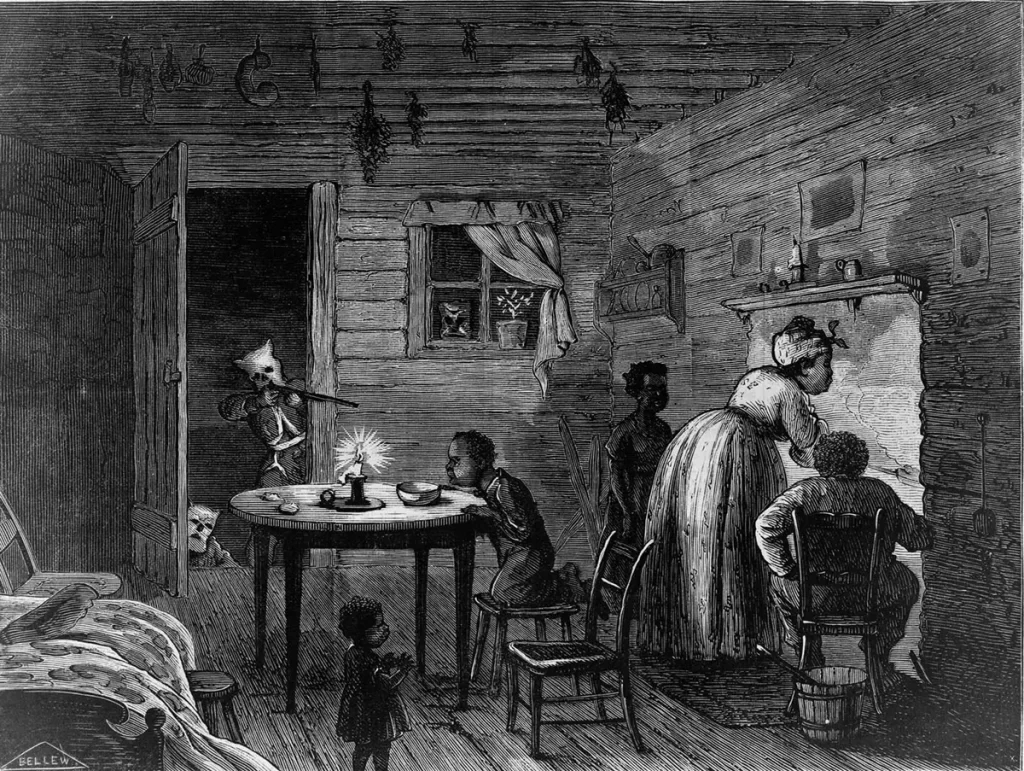
“Visit of the Ku-Klux,” drawn by Frank Bellew, Harper’s Weekly, February 24, 1872.
Courtesy Library of Congress.

The story reached its climax when Gainey and Few Woods went into Oxford together one evening. After convincing his new friend to purchase some wine in town, the undercover agent secretly met with two of his local contacts, Wilson and a former sheriff named Mahon. Gainey’s plan involved coaxing Woods into recounting KKK crimes by “plying with the bottle,” while he arranged for the two civil officers to hide below them under a bridge so they could overhear the confession.[3] This plan worked to perfection as Woods revealed the names of several masked Klansmen responsible for multiple shootings of freed people in that county. Gainey then reported their identities to the Secret Service headquarters and local officers learned this crucial information as well.

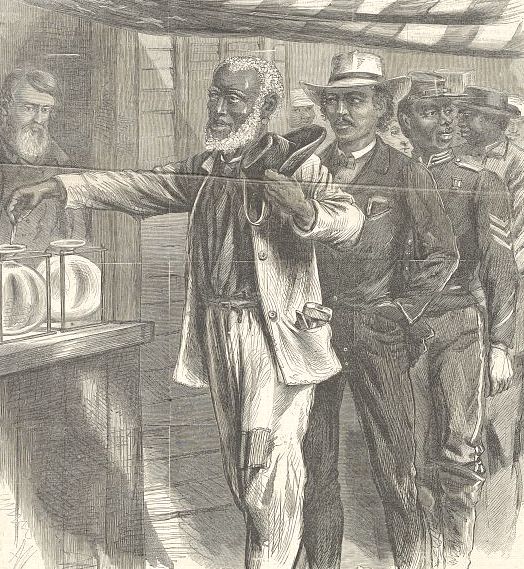
Now, the particular attacks that were retold in the confession took place at the home of a “Widow Watson,” where KKK members John Conkle, Mat Goolsby, Few Woods, and others attacked an African-American man and shot him in “the back with a double barreled shot gun, forty-seven buck shot entering into him.”[4] Gainey may be describing the shooting of a freedman named Jacob Watson who lived next door to a widowed white woman named Amanda M. Watson in 1870. He was a captain in a Black militia company and led a local Union League chapter at that time as well.[5] According to other sources, earlier that year the Lafayette County Klan made a series of raids against Jacob Watson and his lieutenants, Sandy Newberry and Jake Boone, after their militia company conducted nighttime drills that “annoyed” whites in the vicinity.[6] Those sources reported that Jacob Watson received serious gunshot wounds from those Klan raids, suggesting that Woods’s confession to Gainey was describing this same attack from a few months prior.[7] Throughout the South during Reconstruction, the KKK specifically targeted Black men belonging to Union Leagues—which were local organizations designed to politically mobilize Black voters—and militias in large numbers in order to intimidate their efforts toward racial equality. African Americans continually struggled to protect their political rights and their own lives, though their allies within the state and federal government dwindled significantly by the end of the decade.

“The First Vote,” drawn by A.R. Waud. Harper’s Weekly, November 16, 1867.
Courtesy Library of Congress.

The existing records do not indicate that Gainey’s investigation led to any legal action against Watson’s attackers. During its brief existence, Mississippi’s Secret Service stretched itself thin attempting to investigate Klan attacks throughout the state, and it seemingly lacked sufficient resources to curtail the violence in a meaningful way. With a staff of only seven detectives, the agency had little hope of combatting the vigilantes when many whites either supported or tolerated them.[8] In fact, Gainey observed during his mission, “Almost every young man in the county is a member of the organization or in sympathy with those who are in it.” This case shows that while Alcorn’s Secret Service could identify and expose those responsible for Klan violence, their ability to protect Mississippi’s Black communities proved negligible.

Alcorn’s hope of defeating the Klan with his Secret Service Bureau ultimately failed to gain an upper hand on the pervasive white terrorism throughout the state. As Reconstruction fell apart in the mid-1870s, the Democratic Party regained control of the Mississippi government, curtailed the political rights of African Americans, and ushered in the Jim Crow era by the end of the century. Beyond a dramatic story, Gainey’s letter offers insight into that the brief period during Reconstruction when the state government had the opportunity to protect the rights and the lives of African Americans. But that would have required more than “cautious and irresolute” action from leaders like Alcorn to be successful and permanent.[9]

Lucas Somers is Assistant Professor of History at Lindsey Wilson College. He earned his Ph.D. at the University of Southern Mississippi in May 2022. His dissertation is entitled Embattled Learning: Education and Emancipation in the Post-Civil War Upper South. In 2018, Lucas served as a Graduate Research Associate for the Civil War Governors of Kentucky Digital Documentary Edition and was a research assistant for the Civil War & Reconstruction Governors of Mississippi project in the summers of 2020 and 2021. He also served as USM’s McCain Graduate Fellow in 2021-2022.


[1] Editorial, The Oxford Falcon, July 23, 1870.

[2] “Officials for Lafayette County,” The Oxford Falcon, June 26, 1869; “Blood Money. Clayton’s Thieves and Murderers Receiving the Reward of Their Infamy. A Nice Party to Control the Affairs of a County,” The Oxford Falcon, November 27, 1869.

[3] CWRGM has not been able to find a Sheriff Mahon in Lafayette County between 1850-1870.

[4] According to a later account of one of the Lafayette County Klansmen, B. F. Goolsby, Mat Goolsby’s father, served as the Grand Cyclops of that den of the Klan, Julia Kendel, “Reconstruction in Lafayette County,” Publications of the Mississippi Historical Society 13 (1913), 240-241.

[5] 1870 United States Federal Census [database online], (Provo, Utah: Ancestry.com Operations, Inc., 2009).

[6] “The Shooting Affair at Near Mrs. Simmons’,” The Oxford Falcon, April 2, 1870.

[7] Kendel, “Reconstruction,” 240-241.

[8] William T. Blain, “Challenge to the Lawless: The Mississippi Secret Service, 1870-1871,” The Mississippi Quarterly 3, no. 2 (Spring 1978), 231.

[9] Michael Perman, The Road to Redemption: Southern Politics, 1869-1879 (Chapel Hill: The University of North Carolina Press, 1984), 35.

Gov. Alcorn’s Secret Service Infiltrates the Ku Klux Klan – Part 1

By Lucas Somers, Ph.D. , Asst. Prof. of History, Lindsey Wilson College

Every once in a while, when reading through the letters written to U.S. governors in the nineteenth century, you will find a story that nearly jumps off the weathered pages. A story that draws you in all on its own and spurs you to learn more about it. Even in its nascent phase, the Civil War & Reconstruction Governors of Mississippi (CWRGM) project has been fortunate to discover several such stories, not the least of which is the J. J. Gainey letter from July 30, 1870.

Gainey’s letter is quite relevant in the year 2022, when movements for racial justice have regained momentum and when true crime podcasts and documentaries are as popular as ever. His letter can help us observe what is arguably one of the most consequential periods in U.S. history. Historians generally agree that understanding the era of Reconstruction is crucial to our ability to grapple with this country’s complex and present-day issues with race. And my personal favorite aspect of CWRGM is that the collection allows us to better understand the long-term effects of emancipation and Reconstruction in Mississippi.

The events depicted in this document occurred five years after the Civil War ended. During that period, Mississippi experienced significant and potentially revolutionary change. The state witnessed the rise of notorious Black Codes under Presidential Reconstruction that attempted to revert African Americans to a status resembling enslavement. By 1868, the Republican-dominated U.S. Congress had taken control of the Mississippi through the military administration of Adelbert Ames. As a result of this second phase known as Radical Reconstruction, the state witnessed sweeping attacks on the Black Codes, and the formerly enslaved population gained civil and political rights enforced by federal troops in the Fourth Military District. This progress came about largely through the ratification of amendments to the U.S. Constitution that provided an opportunity, a hope, for true racial equality for the first time in American history. Radical Reconstruction, therefore, represented a legitimate opportunity for lasting change in the South within only a few years of slavery’s demise.


James D. Lynch, first African American Secretary of State of Mississippi. This is a detail from the Lynch monument in Greenwood Cemetery, Jackson, Mississippi. Courtesy WikiCommons.

Evidence of this rapid progress is demonstrated by the number of African Americans who served in political offices at local, state, and national levels. For example, in 1869, Mississippi elected James D. Lynch Secretary of State, making him the first African American to hold a statewide office. But these advances inspired a backlash from white paramilitary groups, including the Ku Klux Klan, that attacked and threatened formerly enslaved people and their allies. This violent resistance intended to “redeem” the South by reversing all traces of racial equality and reasserting white supremacy.

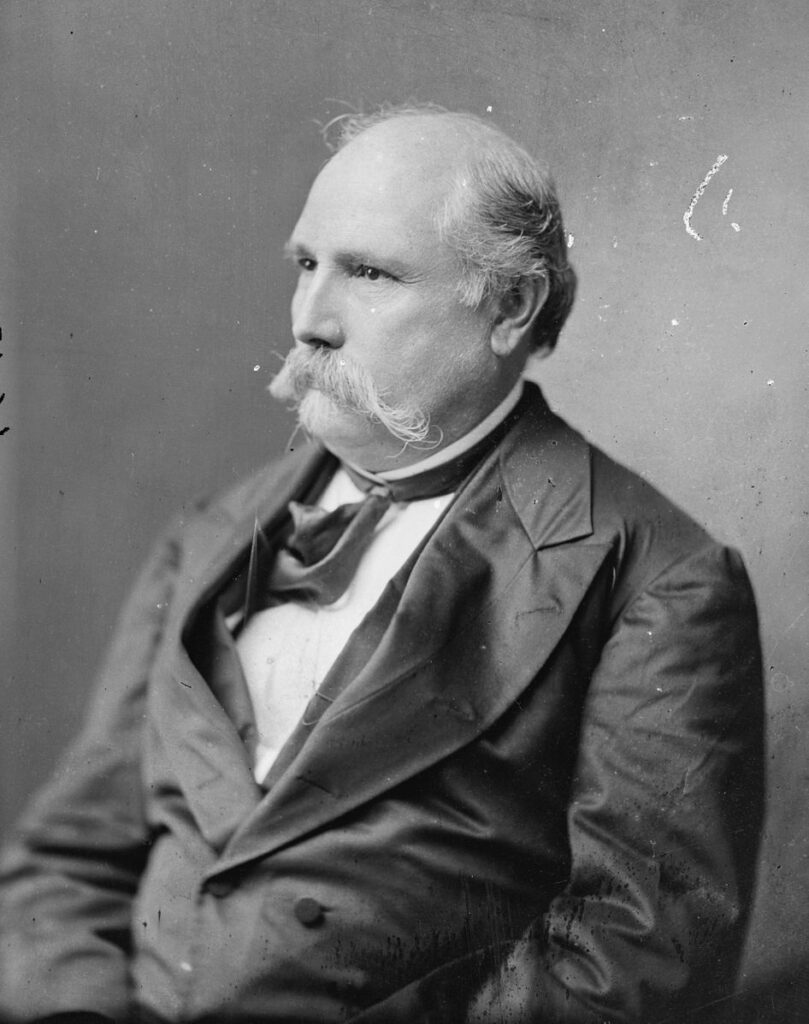
By the time Mississippi native James Lusk Alcorn became the first elected Republican Governor in Mississippi in March 1870, white vigilante violence had become a serious threat to the Black constituents upon whom his election relied. To address this, Alcorn organized a small group of detectives known as the Mississippi Secret Service Bureau, appointed a man named Lewis M. Hall to serve as its leader, and tasked them with investigating the KKK’s terror campaign throughout the state. Concurrently, the federal government began enacting its own plans for combatting white violence throughout the South with the Enforcement Acts.


Mississippi Governor James Lusk Alcorn. Courtesy Library of Congress Prints and Photographs Division. Brady-Handy Photograph Collection. http://hdl.loc.gov/loc.pnp/cwpbh.04713. 

Alcorn was a former Unionist slaveholder who had opposed session, though once the war began, he served as a brigadier general of state militia forces. In postwar Mississippi, Alcorn was viewed as a moderate Republican who advocated for African-American civil rights, including suffrage and the right to serve on juries. When his resistance to the Klan concerned more conservative whites, who tolerated brutal racial violence if it re-established their authority, Alcorn insisted that the investigations were meant to prevent further federal involvement in Mississippi.[1] Ultimately, Alcorn’s efforts to counter the KKK amounted to what one historian called a “cautious and irresolute response.”[2]

The author of this letter, a man named John J. Gainey, had begun working for the Mississippi Secret Service by the summer of 1870. His mission was to determine the identities of the Ku Klux Klan members responsible for a series of violent attacks against African Americans in Lafayette County. Prior to this, Gainey, a twenty-two-year-old native of Cork, Ireland, had worked as a tobacconist in St. Louis, Missouri until he enlisted in the U.S. Army in October 1866. He served in the military for three years, including a stint in the Fourth Military District.[3] Just before joining the Secret Service, Gainey had worked for a short time as the deputy sheriff of Sunflower County, Mississippi. In January 1870, Gainey, accompanied by a group of federal soldiers, attempted to arrest Tully S. Gibson, a former Confederate soldier. After a firefight that resulted in Gibson’s death, conservative newspapers throughout the state branded Gainey a “murderer” and “a Radical carpet-bagger.”[4] Despite this reputation among native Mississippians, Gainey still successfully passed himself off as a Klan sympathizer only a few months later.

The letter featured here provides a gripping narrative of Gainey’s undercover operation as he attempted to carry out Alcorn’s policy of ending the white terrorism in his state. Though Gainey achieved all his objectives in Lafayette County, the overall impact of that mission in protecting the hard-fought civil rights for Black Mississippians ultimately proved negligible. In part 2 of this blog post, we will examine Gainey’s mission itself and try to understand why local African Americans remained vulnerable to white violence despite his success.


Lucas Somers is Assistant Professor of History at Lindsey Wilson College. He earned his Ph.D. at the University of Southern Mississippi in May 2022. His dissertation is entitled Embattled Learning: Education and Emancipation in the Post-Civil War Upper South. In 2018, Lucas served as a Graduate Research Associate for the Civil War Governors of Kentucky Digital Documentary Edition and was a research assistant for the Civil War & Reconstruction Governors of Mississippi project in the summers of 2020 and 2021. He also served as USM’s McCain Graduate Fellow in 2021-2022.


[1] “Letter from Hon. J. L. Alcorn,” The Clarion-Ledger, May 30, 1872.

[2] Michael Perman, The Road to Redemption: Southern Politics, 1869-1879 (Chapel Hill: The University of North Carolina Press, 1984), 35.

[3] Registers of Enlistments in the United States Army, compiled 1798 – 1914, NARA RG 94, Microfilm Series M233, Roll 31.

[4] William T. Blain, “Challenge to the Lawless: The Mississippi Secret Service, 1870-1871,” The Mississippi Quarterly 3, no. 2 (Spring 1978), 232; Editorial, The Clarion-Ledger, February 3, 1870.

css.php